

Dreaming
Station 7: Vyšší Brod/Hohenfurth
As a child, Bernard of Clairvaux dreamed of the birth of Jesus.
Meditation text to listen to
Meditation text for the journey
to Vorderweißenbach
What lifelong dream fulfills me?
When has this dream been beyond my reach?
What sort of dream might God have for me or for us?
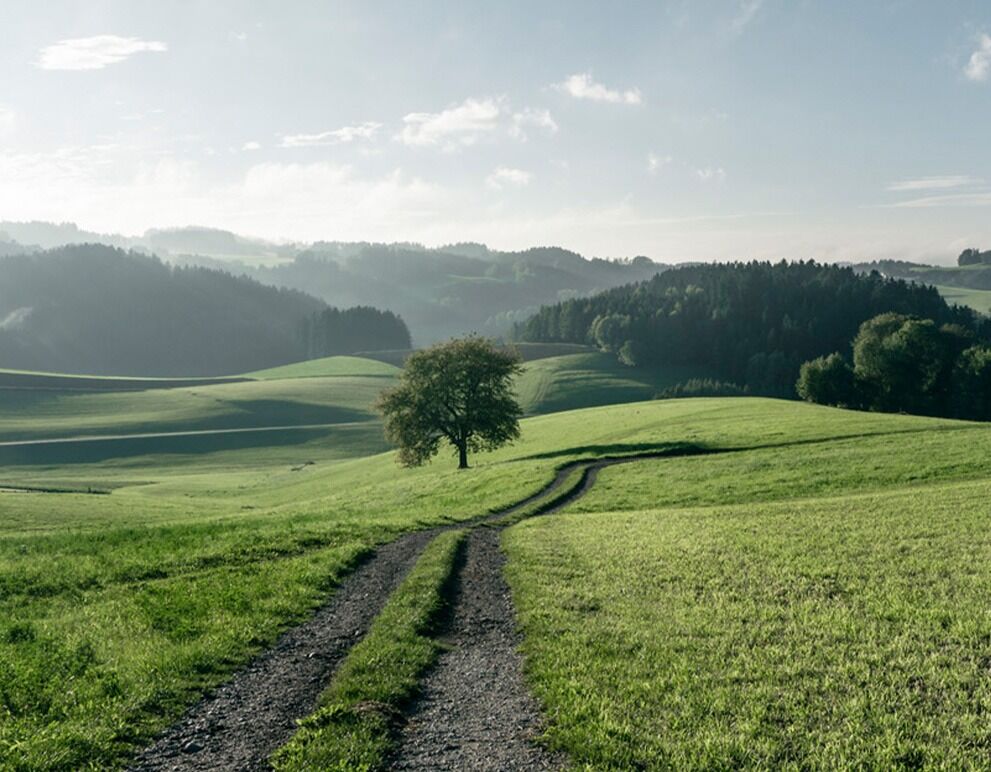
The expansive landscape along this pilgrimage route invites me to dream as I walk. I think about my future and about goals that I hope to achieve in my life. Vyšší Brod Monastery, which was originally established by monks from Willhering in the Middle Ages, has experienced both good times and bad. The monastery was closed down during many years of occupation by the Nazis and later by the Soviet regime. But in the early 1990s, a new monastic life was reborn. Today, gradually, the buildings of the monastery are being restored. Hope in God will not allow us to perish.


The Cistercian monastery in Vyssi Brod, formerly Hohenfurt, shows how far north the Wilhering Abbey and its monks travelled. Wok von Rosenberg founded the monastery in 1259. It is said that he did so out of gratitude for being saved from the floods of the nearby Vltava River. The Rosenbergs were the dominant noble family in the area, whose traces are still visible in many places; note the five-petalled coat of arms. Until the 17th century, the convent shaped the region spiritually and economically. The community survived the Hussite Wars, fires and Josephine reforms. However, the Linz Gestapo dissolved the monastery in 1941 and turned it into a camp for German resettlers. A small convent returned in 1945. In 1948, the last abbot emigrated to the Cistercian monastery of Zwettl in Lower Austria. The communist regime used the monastery as quarters for the army and border police for several years before it fell into disrepair. After the fall of communism in 1989, it experienced a new heyday. The monastery is being renovated piece by piece, has been a national cultural monument since 1995 and is once again open to the public. A small community of Cistercians is reviving the spirituality of the place. Worth seeing: the Gothic church, the cloister, the chapter house and the Baroque library. Among the valuable art treasures are a golden abbot's chair, paintings, the Hohenfurther Madonna and the Zavis Cross. The post office museum in the monastery grounds is also worth a visit. In earlier times, merchants and travellers would meet at the ford across the Vltava River, from which the town takes its name. Today, boats bustle on the picturesque river in summer.


