

Our history
The history of pilgrimage
Exercise clears the mind and helps us to ‘look within ourselves’. Pilgrimage is not just a fashion trend, but fulfils a need for meaning and spiritual enrichment.
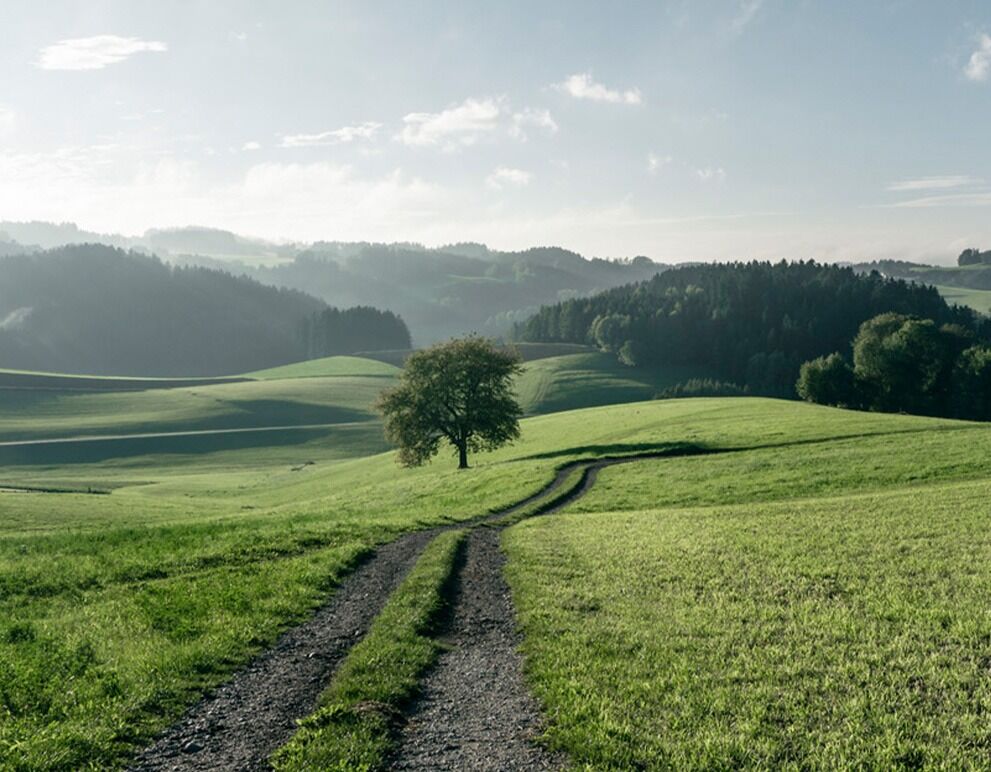
Experience. Pilgrimage has a long Christian tradition. It also connects us with other religions. The ‘journey within’ can make us more receptive to the wonders of creation and the loving source of life that we call God. In the best case, it becomes ‘praying with your feet’. The Wilheringer Way connects Wilhering Abbey with its former daughter foundation, Hohenfurth Abbey in South Bohemia, and with all the churches in the Wilhering pastoral care area. This cross-border pilgrimage invites us to walk new paths together and towards one another, connected with the beauty of the Mühlviertel landscape. You will be accompanied on this journey by insights from Cistercian spirituality. The basis for this is laid by St. Benedict of Nursia (c. 480–547 AD), the founder of Benedictine monasticism, and St. Bernard of Clairvaux (c. 1090–1153 AD), the most important representative at the beginning of the Cistercian reform movement. Fifteen ‘Gs’ – from “blessed” to ‘changed’ – await you along the way. We invite you to put together your own individual programme, both in terms of the stages of the route and the selection of ideas and questions. A unique feature of the Wilheringer Way is the opportunity to rent a bed in a pilgrim's room in individual parish houses. You are also welcome to take advantage of the spiritual offerings of the respective parishes or monasteries. I wish you all the best for your pilgrimage between the Danube and the Vltava! May the blessing of God, who has become our companion in Jesus Christ, accompany you on your Wilheringer Way!
Abt Reinhold Dessl OCis

