
Restraining
Station 5: Zwettl an der Rodl
"Nothing is more contrary to a Christian than intemperance." - Rule of Saint Benedict
Meditation text to listen to
Meditation text for the journey
to Bad Leonfelden
Where in the world and in our lives have we failed to find the right balance?
How do you understand, as our mission as Christians, to appreciate the world around us?
When could it be more rewarding to show restraint in our decisions?
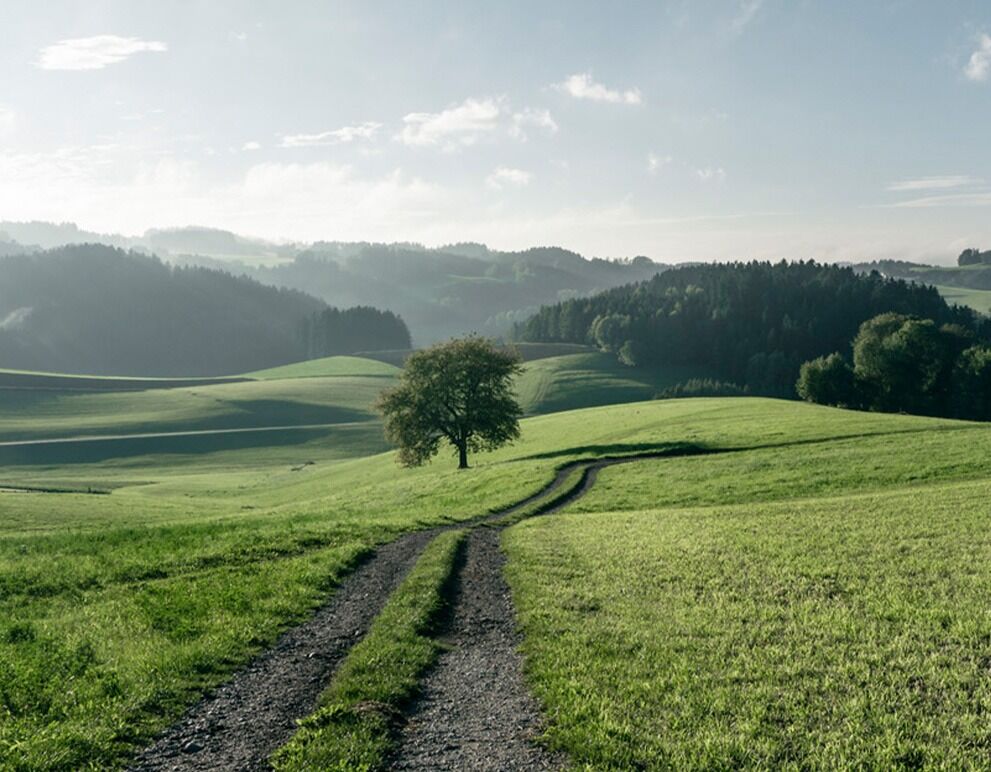
A major concern for Saint Benedict is that we should try to find the correct balance in life. Every generation, including our own, tends towards excess. Think of our relationship with God's creation. The search for the right balance is an important impulse for us. As I walk, I am aware of my pace. I consider what and how much I am carrying in my backpack. What are my expectations of these paths, of the hostels, and of my provision? I also observe the landscape that surrounds me. What is still natural and unspoilt? What have humans changed? These questions move me.


The clearing on the Rodl, as the place name can be translated from Slavic, still shines today with its particularly beautiful houses. Since the Middle Ages, salt and fish traders have passed through the town on their way to Bohemia. Crafts and gastronomy flourished, even though only 25 houses made up the market when market rights were granted around 1500. However, almost all citizens were also involved in agriculture, which earned them the name ‘Ackerbürger’ (farmers). Their beautiful houses, decorated with Baroque façades, are still impressive today and most of them are listed buildings. Examples include the Zwettlerhof, formerly the ‘Gasthaus zum schwarzen Rössl’ (Black Horse Inn), and the Färberhaus (Dyer's House), located directly on the bridge over the Rodl. Its use also tells a piece of economic history. In the 15th century, leatherworkers, tanners and dyers worked there. They were followed by dye workers and weavers, and finally, around 1800, English spinning machines made their appearance. The Zwettler Baumwoll- und Damisfabrik (Zwettl Cotton and Damask Factory) closed down at the end of the 1870s. The Rodl river no longer carried enough water, and competition from larger factories became too intense. Saint John of Nepomuk watches over the fortunes of the town from the bridge. He died by drowning because he refused to reveal the confessions of the Bohemian queen to her jealous husband, the king. The parish church of Zwettl, a two-nave nave with a late Gothic ribbed vault, and the adjacent Baroque parish courtyard are also well worth seeing. Incidentally, Zwettl has produced several Wilhering abbots. Those who have had enough of history and are looking to cool off will find what they are looking for at the Rodlbad.


