
Being Loved
Station 10: Waxenberg | Market town of Oberneukirchen
„The merciful love of her God is revealed, in which he has visited us like the rising light from on high." Luke 1:78, Saint Bernard of Clairvaux
Meditation text to listen to
Meditation text for the journey
to Oberneukirchen
From whom do I experience love in my life?
To whom do I pass on love?
What does love mean to me?
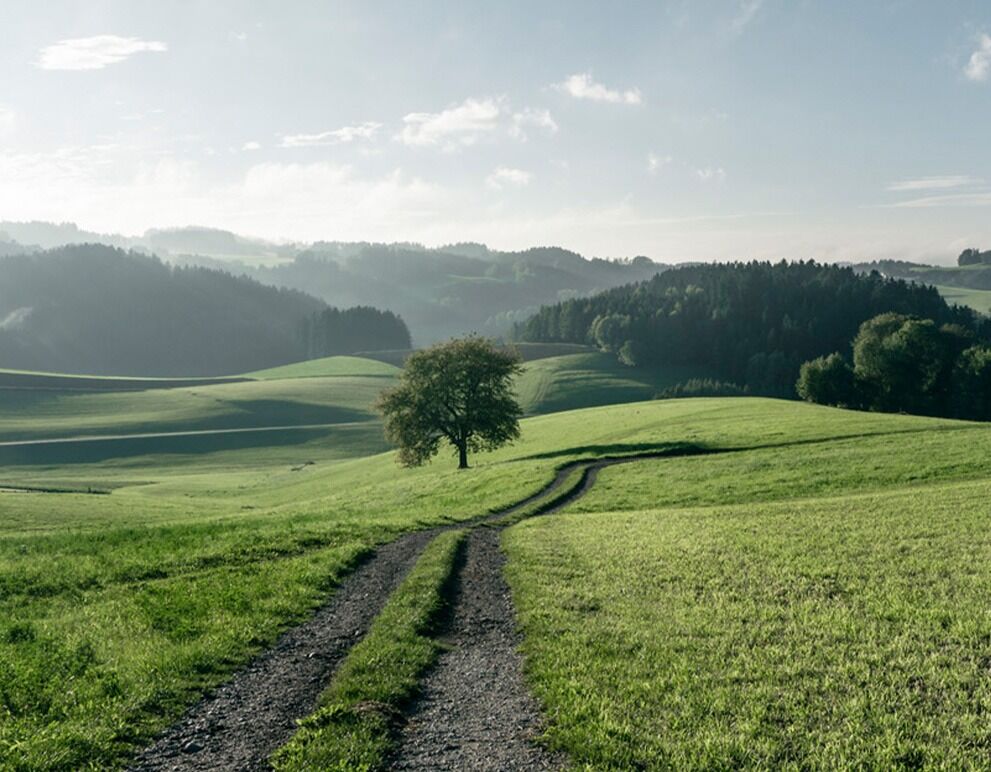
Saint Bernard tirelessly speaks of God's love and humanity's response to it. From the sacred heart of Jesus, the rays of God's merciful love shine on us. I seek sources of light in my surroundings. Rays of sunlight glittering upon wet leaves. Small windows of light between dark clouds. A sunbeam falls from between the branches of trees. In doing so, I try to immerse myself in the warmth of the light. I absorb this warmth into myself.


Although only a small town, Waxenberg is steeped in history. Soon after the first Wilheringers began clearing the new territories in the north of the Mühlviertel region, they had Waxenberg Castle built in the 12th century as the centre of their clearing empire. A mighty keep, which can also be climbed, has been preserved to this day. In good weather, it offers a panoramic view of the Alps. However, the Wilheringer family soon died out and several noble families followed until the castle was finally sold to the Starhembergers in 1647. They built themselves a more comfortable palace in the village. The castle was destroyed by lightning in the 18th century. A new castle was added to the existing castle at the beginning of the 20th century. The castle chapel became the parish church of Waxenberg in 1785. It is dedicated to St. Joseph. He is accompanied in the church by St. Camillus, patron saint of nurses, and St. Joachim, patron saint of married couples. Unusual is the figure of St. Ivo of Hälori, the patron saint of the legal professions. He recalls that Waxenberg was long the seat of jurisdiction. During the corporative state, the castle served as a base for the Heimwehr, led by Ernst Rüdiger von Starhemberg. An attack by local National Socialists in 1936, which left one person dead, even made international headlines. In 1938, the castle was expropriated by the National Socialists and converted into a camp for so-called ethnic Germans during the war. Today, the castle is used for events and as the office of the local water cooperative.


